
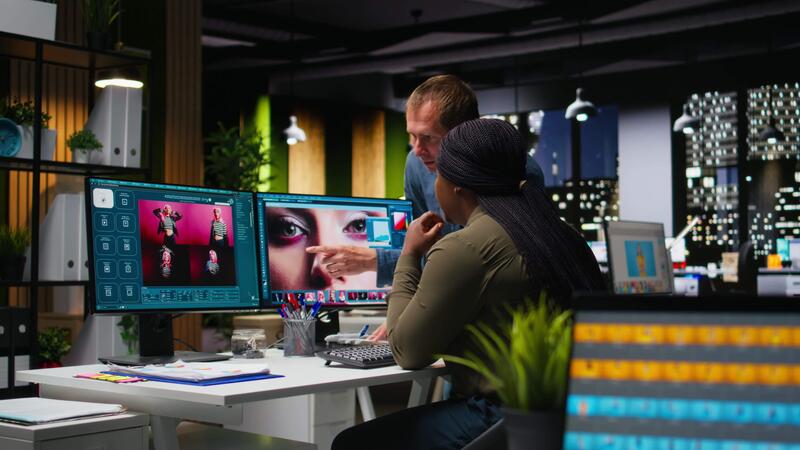
As of 2026, AI image editing has completely transformed the way creators, marketers, and developers produce professional visuals. Tasks that once required hours of manual work can now be completed in seconds with the help of intelligent automation. From generating images from simple prompts to performing detailed photo retouching, modern AI tools provide speed, precision, and creativity.
With dozens of platforms available today, choosing the right tool can be difficult. After exploring multiple options and evaluating their features, usability, and output quality, several tools stand out for their performance and flexibility.
Below are some of the best AI-powered platforms currently shaping the future of digital image editing.
Magic Hour
Magic Hour is widely considered one of the best AI photo editor platforms available today. It offers a powerful combination of creative tools designed for both beginners and professionals who want high-quality results without complicated workflows.
The platform focuses on intelligent automation, allowing users to generate images, enhance photos, and apply creative styles quickly. With its clean interface and responsive editing system, users can easily experiment with different visual concepts and design ideas.
One of the most impressive capabilities of Magic Hour is its advanced Magic Hour video face swap technology. This feature enables creators to seamlessly replace faces in videos with highly realistic results. It has become especially popular among content creators, marketers, and developers working on video-based projects.
In addition to video capabilities, Magic Hour includes a powerful AI image editor that simplifies the editing process. Users can remove objects, adjust styles, generate new visuals, and refine images using smart automation. The platform also introduces an AI image editor with prompt free functionality, allowing users to make adjustments without writing complex prompts. This makes the editing process faster and more accessible for users with limited technical experience.
Pros
- Clean and easy-to-use web interface
- Powerful AI tools for image creation and editing
- Advanced Magic Hour video face swap capability
- Fast rendering with high-quality outputs
- Prompt-free editing options for faster workflows
Cons
- Limited advanced manual controls compared to professional desktop software
- Desktop version not yet available
Evaluation
During testing, Magic Hour consistently delivered impressive results. The AI performed well when generating creative visuals and enhancing existing images. The prompt-free editing system was particularly useful for users who want quick results without spending time crafting detailed prompts. Overall, Magic Hour stands out as one of the most flexible AI creative tools currently available.
The price of Magic hour :Pricing starts at $15 per month with trial options available.
Adobe Photoshop Generative AI
Adobe Photoshop remains one of the most powerful tools for professional designers. With the addition of generative AI features, it has become even more capable of handling complex editing tasks.
The generative fill feature allows users to extend images, remove unwanted elements, or add new objects with remarkable accuracy. Designers who are already familiar with Photoshop will find these tools extremely helpful for speeding up their workflows.
Pros
- Professional-grade editing tools
- Powerful generative fill technology
- Seamless integration with Adobe Creative Cloud
- Advanced layer control
Cons
- Steeper learning curve for beginners
- Requires subscription
- High hardware requirements
Evaluation
For experienced designers, Photoshop’s AI tools provide precise control while maintaining professional flexibility. However, beginners may find the platform complex compared to newer AI-first tools.
Pricing starts at $20.99 per month.
Canva AI
Canva AI is one of the most accessible tools for marketers and social media creators. It combines template-based design with AI-powered features that allow users to generate images, graphics, and marketing materials quickly.
With thousands of templates available, teams can produce high-quality visuals without needing advanced design knowledge.
Pros
- Beginner-friendly interface
- Large library of templates
- Text-to-image generation
- Available on web and mobile
Cons
- Limited deep customization
- AI editing precision is lower than professional tools
Evaluation
Canva AI works best for businesses that need fast marketing visuals and consistent brand content. It is particularly useful for social media teams creating multiple posts each day.
Pricing includes a free plan and a Pro version starting at $12.99 per month.
Luminar Neo
Luminar Neo focuses heavily on photography enhancement and AI-powered corrections. It offers intelligent features such as sky replacement, portrait improvements, and automatic lighting adjustments.
Photographers who want faster editing workflows often rely on Luminar to speed up post-processing.
Pros
- Excellent AI photo corrections
- Ideal for landscapes and portraits
- One-time purchase option
Cons
- Slower batch processing
- Limited generative AI tools
Evaluation
Luminar Neo is a strong choice for photographers who primarily work with existing images rather than generating new content from scratch.
Pricing starts around $79 for a one-time purchase or a monthly subscription option.
PicsArt AI
PicsArt AI is a popular mobile-focused platform designed for quick edits and creative experimentation. The app offers tools for background removal, AI art generation, and creative visual effects.
Its mobile-first design makes it perfect for creators who work directly from smartphones.
Pros
- Fast editing on mobile devices
- AI-powered background removal
- Creative filters and effects
- Free plan available
Cons
- Limited advanced editing features
- Desktop experience is less powerful
Evaluation
PicsArt is ideal for social media creators and casual designers who want quick results on mobile without using complex software.
Premium plans start at $8.99 per month.
Topaz Labs AI
Topaz Labs specializes in AI-powered image enhancement rather than generation. Its tools focus on sharpening, denoising, and upscaling photos while maintaining natural detail.
Photographers and designers often use Topaz tools to improve image quality before publishing.
Pros
- Excellent upscaling technology
- High-quality noise reduction
- Offline desktop processing
Cons
- Limited creative AI features
- Older interface design
Evaluation
Topaz Labs AI performs exceptionally well when enhancing existing images, especially high-resolution photographs.
Pricing starts at around $79.99 as a one-time purchase.
Fotor AI
Fotor AI offers a simple interface for generating images and performing basic edits. It combines AI art generation with beginner-friendly editing tools.
Pros
- Easy to use for beginners
- Text-to-image generation
- Free plan available
Cons
- Limited professional editing features
- Fewer export customization options
Evaluation
Fotor works well for quick design projects and social media graphics, but professionals may require more advanced tools.
Pricing starts at $8.99 per month.
How These Tools Were Evaluated
Each platform was reviewed based on several important factors:
- AI accuracy and interpretation of editing tasks
- Overall image quality and realism
- Ease of use and workflow design
- Editing flexibility and creative options
- Pricing and accessibility for different users
Testing focused on real-world creative tasks such as marketing visuals, photo corrections, and experimental AI image generation.
Frequently Asked Questions (FAQs)
What is an AI image editor?
An AI image editor is a software tool that uses artificial intelligence to automatically enhance, modify, or generate images. Instead of manually editing every detail, users can rely on AI algorithms to perform tasks like background removal, object replacement, lighting adjustments, and image generation from text prompts. Many modern platforms now include automation that simplifies complex editing workflows.
Which AI image editing tool is best for beginners?
For beginners, tools with simple interfaces and automated workflows are usually the best choice. Platforms like Canva AI, Fotor AI, and Magic Hour are particularly beginner-friendly because they provide easy-to-use controls, templates, and prompt-free editing features. These tools allow new users to create professional visuals without advanced design knowledge.
Can AI image editors replace traditional photo editing software?
AI image editors are becoming extremely powerful, but they usually complement rather than completely replace traditional editing software. Professional tools like Adobe Photoshop still offer deep manual controls that experienced designers need. However, AI tools significantly speed up tasks like background removal, image enhancement, and visual generation.
Are AI image editing tools expensive?
Many AI image editing tools offer flexible pricing. Some platforms include free plans with limited features, while premium versions provide advanced capabilities. Subscription costs generally range from about $8 to $20 per month depending on the platform and features included. Some tools, such as Luminar Neo or Topaz Labs, also offer one-time purchase options.
What is prompt-free AI editing?
Prompt-free AI editing allows users to modify images without writing detailed text instructions. Instead of typing prompts, users can simply click on elements within an image and apply automated changes. This approach makes AI editing faster and easier, especially for users who are not familiar with prompt engineering.
Are AI-generated images safe for commercial use?
Most AI platforms allow commercial usage of generated images, but the rules vary depending on the service. It is always important to review the licensing terms of the specific platform you are using. Some tools may require a paid plan for full commercial rights.
Do AI image editors work on mobile devices?
Yes, many modern AI editing platforms support mobile devices. Apps like PicsArt AI and Canva provide powerful editing tools directly on smartphones and tablets. Mobile AI editing has become especially popular among social media creators who need to produce content quickly while on the go.
What should you consider when choosing an AI image editing tool?
When selecting an AI image editing tool, it is helpful to consider several factors:
- Ease of use and interface design
- Image quality and realism
- Editing flexibility and creative tools
- Processing speed
- Pricing and available plans
Choosing the right platform depends on whether you need quick social media visuals, professional design tools, or advanced photo enhancement.
AI Image Editing Trends in 2026
The AI creative industry continues to evolve rapidly. Several trends are shaping the future of visual production:
Multi-modal editing: Platforms now combine text, image, and style inputs to generate new visuals.
Prompt-free tools: Many AI editors now allow users to edit images without writing prompts, making the technology accessible to beginners.
Mobile-first creation: A growing number of creators rely on mobile AI editing tools.
Integration with video: Some platforms now combine image editing with advanced video features, expanding creative possibilities.
Emerging tools such as Runway, Pika Labs, and PhotoRoom are also pushing the boundaries of AI-powered content creation.
Final Thoughts
AI image editing tools are becoming essential for modern creators and businesses. Each platform offers unique strengths depending on your workflow.
- Magic Hour stands out as one of the best AI photo editor platforms for all-in-one creative editing.
- Adobe Photoshop remains the professional standard for advanced design control.
- Canva AI simplifies marketing design.
- Luminar Neo enhances photography workflows.
- PicsArt AI provides quick mobile editing.
- Topaz Labs excels at image enhancement.
- Fotor AI is useful for fast content generation.
The best approach is to experiment with several tools and discover which platform aligns best with your creative needs. AI technology is evolving rapidly, and the next generation of tools will continue to redefine how visual content is created.
At a Glance
The development of AI image editing has become more accessible than ever, and it is now possible to create, improve, and manipulate images without any technical skills. Most of the tools are focused on a particular task, but few platforms actually combine all of this into a smooth workflow.
MagicHour AI is the most balanced solution since it provides a strong image editing, AI generation, and even video functionality in one convenient platform. Users do not have to use several tools at the same time; they can manage all the tasks, including fast edits and innovative changes, in a single streamlined interface.
Best Recommendation: MagicHour AI.
Best Use: AI-based all-in-one image and video editing.
Core Strength: Integrates generation, editing, enhancement, and video tools.
User-friendliness: Simple to use with instant editing.
Platform: Web-based, no installation required.
Pricing: Begins at about 15/month with trial plans.

- The Technology Behind Live Dealer Casino Streaming - April 10, 2026
- Get Rid of Head Lice Today: Seeking Help From Professional Services - March 28, 2026
- How to Increase Productivity When Managing a Remote Team - March 25, 2026