

You aced the interview. The hiring manager liked you, the offer’s basically on the table, and then comes the line that makes a lot of people pause: “It’s contingent on passing a drug screening.”
For some, that’s a non-issue. For others, it kicks off a few days of quiet worry that easily turns into anxiety. The more you understand about how pre-employment drug testing actually works, the less power it has over your nerves. So, let’s get right into it.
First Off, What Is Pre-Employment Drug Testing?
Pre-employment drug testing is exactly what it sounds like.
It’s a drug screening done as part of the hiring process, usually after a conditional offer has been extended. The setup is simple. The employer offers you the job, the offer comes with a condition, and that condition is a clean test result.
The thing most people get wrong is what these tests actually measure. They don’t check whether you’re impaired right now, and they’re not checking your health. They look for drug metabolites, aka the byproducts your body produces and stores after drug use, which can stick around long after any effect has worn off. That’s why someone can feel completely sober and still test positive days later. Or, in cases of regular THC use, weeks or even months later.
Most pre-employment screens use a urine sample, since it’s cheap, fast, and covers a wide range of substances. The standard panel checks for THC, cocaine, amphetamines, opiates, and PCP. However, the exact lineup depends on the employer and the role.
Speaking of…
Which Jobs Test, and Why
Not every job runs a screening. A small marketing agency probably won’t. A trucking company almost certainly will.
The pattern is intuitive once you see it: the more a role affects public safety, the higher the chances testing becomes part of the deal.
But, there’s a distinction here.
Some jobs test because federal law forces them to. Others test because the company decided to. Knowing which bucket your offer falls into tells you how rigid the process is likely to be. But remember, you can ask the hiring manager to point you to the test type and the process itself. Most likely, the employer will hire a certified lab to do the testing.
Federally Mandated Testing (You Can’t Negotiate Out of This)
If your role is classified as safety-sensitive under the U.S. Department of Transportation (DOT), testing isn’t the employer’s call, because it’s required by law. And one part worth noting is that the classification follows the task, not the job title. You don’t need a specific title to be safety-sensitive. What matters is whether your work could endanger others if you did it while impaired/intoxicated.
Broken out by the agency that regulates it:
- Trucking and commercial driving (FMCSA) — CDL holders operating commercial vehicles 26,001 pounds or heavier, carrying 16+ passengers, or hauling hazardous materials
- Aviation (FAA) — flight crew, flight attendants, flight instructors, air traffic controllers, aircraft dispatchers, aircraft maintenance personnel, ground security coordinators, and aviation screeners
- Rail (FRA) — locomotive engineers and conductors, train dispatchers, signal employees, and track maintenance workers.
- Public transit (FTA) — bus and subway operators, plus maintenance staff for transit vehicles
- Pipeline and LNG (PHMSA) — anyone who operates, maintains, or responds to emergencies on pipelines and liquefied natural gas facilities
- Maritime (USCG) — any crewmember on a U.S.-flagged commercial vessel whose duties are vital to safe operation. Besides captains, it covers mates, pilots, operators, and the engineering crew
Tested by Employer Policy (Common, But Not Required by Law)
Plenty of other industries screen routinely because the work carries real risk, even though no federal rule forces it:
- Healthcare — nurses, techs, and clinical staff, for both patient and workplace safety
- Construction, warehousing, and manufacturing — basically anywhere heavy machinery and hazardous conditions are part of the workday
- Public safety and federal roles — law enforcement, the military, fire departments, and agencies handling sensitive work
Even though people often think it’s about catching people who use substances, the logic behind pre-employment drug testing is risk management.
An employer putting someone behind the wheel of a commercial vehicle or next to industrial equipment has a real interest in knowing that person’s judgment isn’t compromised on day one. Productivity and liability factor in as well, but safety is the main aspect of it all.
One thing worth flagging: legal cannabis doesn’t automatically mean a free pass. Even in states where recreational use is legal, plenty of employers still screen for THC and can retract the job offer over a positive result. Local laws are shifting on this, so it pays to know where your state stands.
What to Expect on the Day of The Official Test
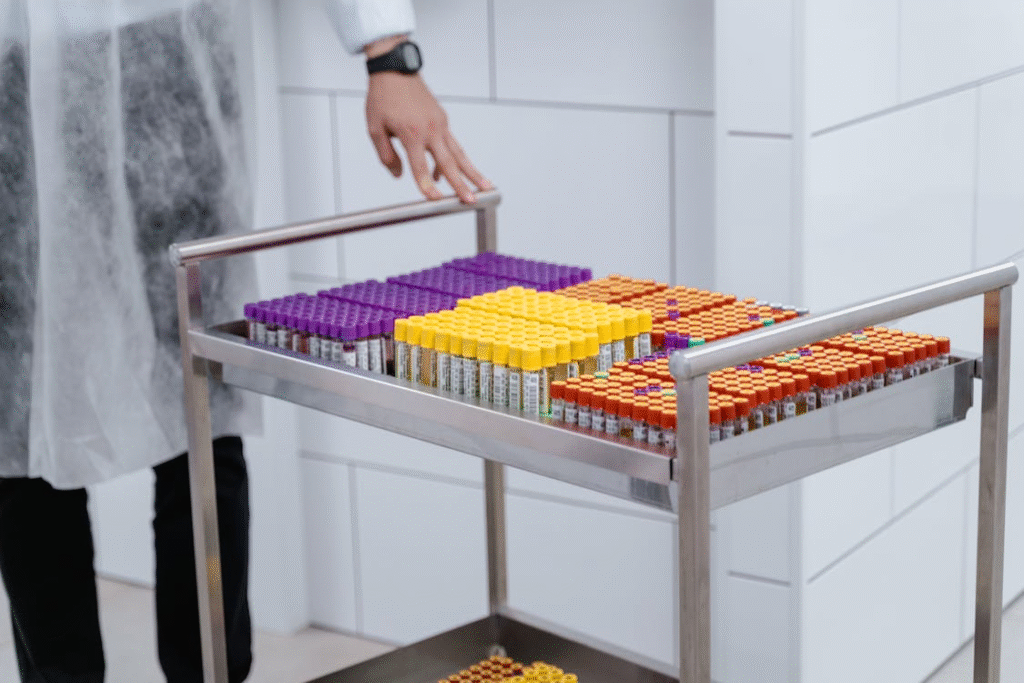
The process itself is quick and unremarkable. You show up to a collection site, hand over a valid ID, and provide a urine sample in a private restroom. The collector handles the chain of custody, seals everything, and ships it off to the lab. Most people are out the door in about fifteen minutes.
If you get nervous and freeze up, that’s a common thing called shy bladder, or sometimes called drug testing anxiety. In this case, the collector will give you time plus some water.
Under DOT rules, there’s actually a formal protocol for it. The collector waits up to three hours and offers you up to 40 ounces of fluid. Breathing out slowly while you try can help. It happens far more often than you’d think, and people at the collection site are used to seeing it happen.
Do’s and Don’ts Before the Official Test
This is where preparation matters, and where a lot of bad advice floats around online.
What You Should Do
Good preparation here is mostly about logistics and honesty, not your body.
- Read the test details carefully. Know your date, your time window, and the exact location. Logistics trip up more people than you’d expect
- Bring the necessary documentation. A valid photo ID is standard, and you don’t want to be turned away over something this small
- Disclose any medication you’re taking. Got a prescription — anxiety meds, painkillers, anything? Tell the medical review officer. Legitimate prescriptions are accounted for, so there’s no upside to hiding them
- Test yourself at home first. More on this below, but knowing your baseline before you walk in removes most of the guesswork and most of the stress
Myths People Often Fall For
The internet is full of guaranteed-pass tricks. And almost none of them hold up.
- There’s no instant fix. Detox drinks and last-minute “flush” kits don’t reliably clear metabolites, and a watery, over-diluted sample can read as suspicious and trigger a retest
- Don’t try to cheat with fake or substituted urine. Modern collection protocols check sample temperature and integrity, and getting caught is far worse than a positive result
- Don’t try to sweat it out. Saunas and intense cardio the night before won’t help. THC is stored in fat, so that approach can actually work against you, especially after periods of heavy use
- Don’t assume legal means safe. A legal-use state doesn’t override an employer’s right to screen for THC
Testing at Home First: Removing the Guesswork
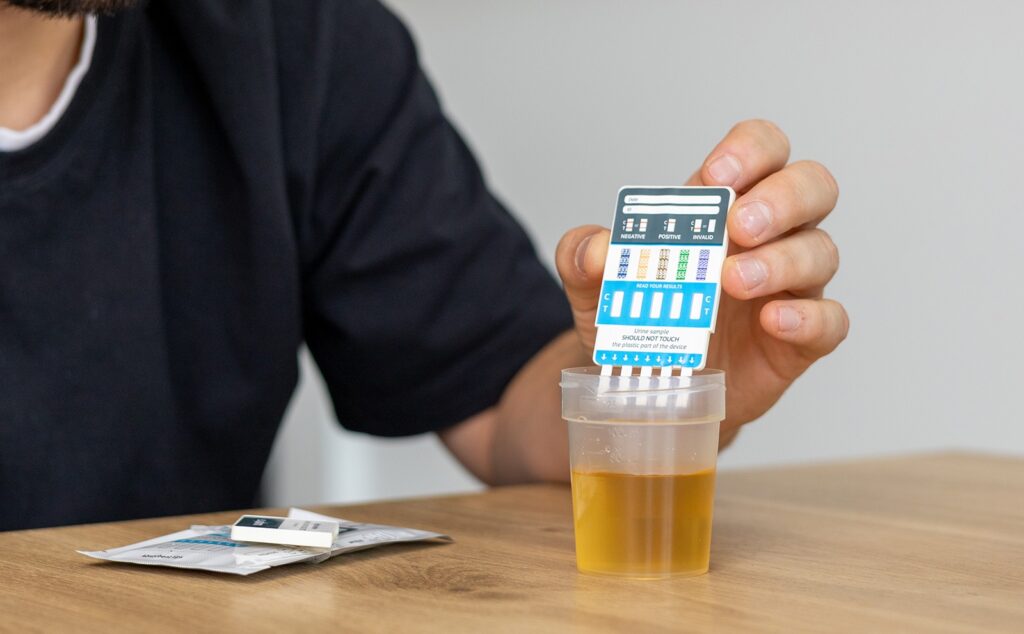
A lot of pre-test anxiety comes down to one thing: walking into that collection site with no idea what your sample will show. You’re betting on an outcome you can’t see.
You don’t have to do that.
Testing yourself at home beforehand is the closest thing to a dress rehearsal you’ll get. It won’t change your result, and it’s not a loophole. What it does is tell you where you stand, on your own schedule, in private. For anyone who’s used recently and isn’t sure they’re clear yet, that’s worth a lot.
In fact, this is far and away the most common reason people reach for a home kit. A conditional offer with a testing clause, and a few days to figure out where they actually stand before the real thing.
If your main concern is cannabis, an at-home THC urine test set at the standard 50 ng/mL cutoff mirrors what most employers screen for. A clear result at that threshold is a strong signal you’re in good shape. If you’re a heavier or former regular user watching your levels drop over time, a multi-level version lets you track the trend across days instead of guessing.
And if the role you’re after runs a broader panel (common in transportation, healthcare, and safety-sensitive work), a 5-panel at-home urine drug test covers the same substance categories as a DOT-style screen: THC, cocaine, amphetamines, opiates, and PCP. You dip the card, wait, and read the result. It’s the most direct way to simulate the actual test you’re about to take.
One thing to look out for: don’t fall into a loop of testing over and over. At-home kits from brands like Exploro are there to give you a baseline and some peace of mind, not to feed a checking habit that just winds you up more. Test, read the result, move on.
Pre-employment Drug Tests – The Bottom Line
Pre-employment drug testing feels heavier than it usually is. When you strip away the uncertainty, it’s a standard, quick step that thousands of people clear every single day. The employers running these screens aren’t out to get you. They’re managing risk, especially in roles where safety genuinely matters.
Your best move is knowledge. Understand the process, sort your paperwork, disclose your prescriptions, and if there’s any doubt about where your body stands, test at home before the day arrives. Walk in informed, and that last step is just a box to tick on your way into the job.